JUST NOW: Epstein Files EXPOSE SHOCKING Details On How The Kardashians RUINED Britney Spears

When a Headline Promises Hidden Files, Public Ruin, and a Familiar Villain
The most effective celebrity headlines do not begin with facts. They begin with tension, with a gap in the reader’s certainty, with the feeling that something forbidden has slipped through a locked door and landed in public view. A phrase like files exposed, paired with a famous family name and a damaged icon, does more than announce a story. It manufactures gravity.
People do not click only because they want information. They click because they want orientation. They want to know whether the world they have been watching from a distance is about to be rearranged, whether someone they admired was betrayed, whether a dynasty they distrust has finally been cornered by evidence, or whether the truth they suspected is now close enough to touch.
That is why these headlines feel larger than entertainment. They borrow the mood of criminal revelation, the architecture of conspiracy, and the moral force of a courtroom summary. They imply not merely gossip but reckoning. Yet once the emotional machinery is stripped away, what often remains is a far messier reality: fragments, insinuations, recycled rumors, unrelated names placed side by side, and audiences doing the connective work themselves.
In the modern attention economy, the headline is not a summary of the article. It is a device engineered to trigger unfinished thought. It places three powerful ideas in collision: secrecy, celebrity, and harm. A sealed archive suggests hidden knowledge. A globally recognized surname provides instant narrative shorthand. A beloved star associated with suffering invites emotional allegiance before a single paragraph has even been read.
The result is a story shape so potent that it can survive without solid proof for far longer than most readers would like to admit. Once a reader has mentally pictured betrayal, manipulation, and a famous victim caught in a larger machine, the imagination starts decorating the empty spaces. The public does not wait for the article to earn its certainty. It often supplies certainty on credit.
That is what makes celebrity rumor culture so durable. It is not built on information alone. It is built on emotional familiarity. Audiences already carry years of context into every new headline: tabloid history, paparazzi footage, old interviews, social media clips, previous scandals, fan theories, redemption arcs, breakdown narratives, family-brand myths. New claims do not arrive on a blank slate. They arrive in a fully furnished room.
A headline that invokes hidden files does not need to explain why files matter. The modern reader has been trained by decades of leaked emails, sealed depositions, hacked archives, and redacted court exhibits to associate documentation with truth. Whether those documents are relevant, complete, authenticated, or understood in context becomes a secondary concern. The aesthetic of evidence often arrives first and lands harder than the evidence itself.
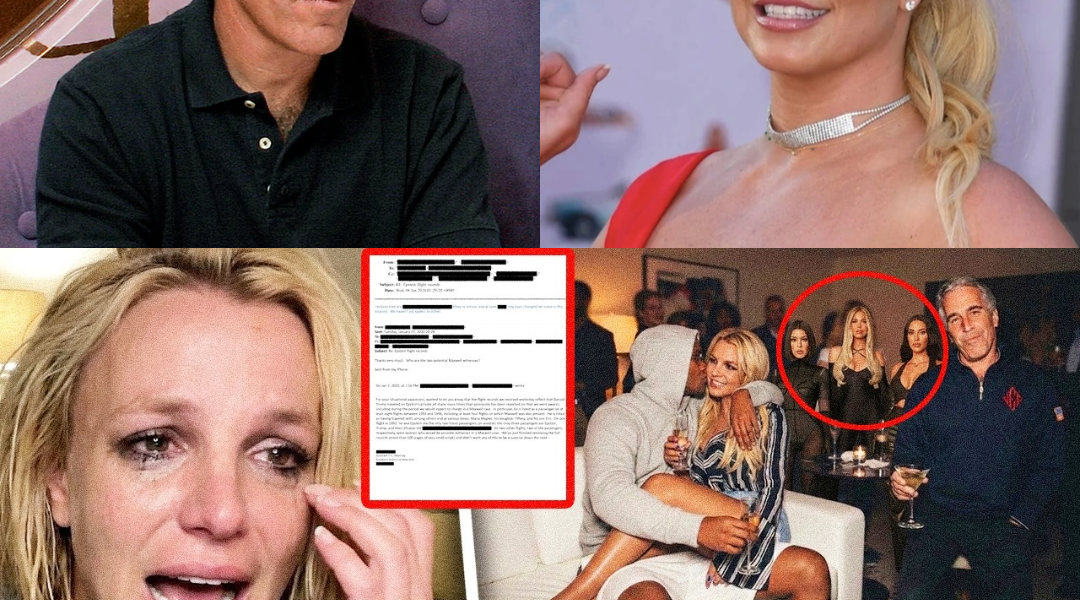
This is where the moral danger begins. The audience sees the shape of proof before it sees proof. A screenshot, a stamped page, a blurred list of names, or a clipped quotation becomes symbolic currency. It may not verify the claim being made, but it creates the sensation that verification is nearby. In a digital ecosystem moving at the speed of outrage, that sensation is often enough.
Celebrity culture intensifies this problem because famous people are not merely individuals in the public imagination. They are roles. One person becomes the fallen princess. Another becomes the untouchable matriarch. Another becomes the strategic manipulator. Another becomes the disposable boyfriend, the enabler, the rescuer, the liar, the survivor. Once assigned, these roles attract stories that fit them and repel details that complicate them.
Britney Spears, as a public symbol, illustrates how unstable the line is between a real human life and a cultural projection. For years she existed not just as a performer but as a screen onto which millions of people cast anxieties about fame, control, motherhood, vulnerability, beauty, surveillance, and punishment.
Her public image was consumed not only through music but through spectacle: breakdown coverage, legal structures, paparazzi obsession, court reporting, fan activism, and endless commentary from people who knew little yet spoke as though proximity could be manufactured through repetition.
A family brand like the Kardashians represents another kind of projection. They function in media imagination as a system rather than as isolated people. They are read as influence, calculation, timing, visibility, monetization, and narrative management. Whether fair or unfair in any specific instance, their public identity has been shaped by years of reality television, business expansion, image control, internet fluency, and an uncanny ability to remain central to cultural conversation.
Put those symbolic structures together in a single headline, and the reaction is immediate. The audience does not see two sets of human beings with complex biographies. It sees an allegory. One side becomes vulnerability damaged by machinery. The other becomes machinery itself. The click is almost inevitable because the story appears to confirm what different groups already wanted to believe.
Some readers arrive wanting justice. Some arrive wanting vindication. Some arrive wanting to see an empire finally cracked open. Others arrive with defensive loyalty and are prepared to reject the story on sight. What matters is that everyone arrives emotionally preloaded. The article does not need to build tension from zero. The tension has already been built over years of public life.
This is one reason celebrity rumor stories so often feel “true” even when they remain poorly sourced. They are not judged only by the quality of evidence but by narrative fit. Does the claim feel compatible with the character the audience has assigned to each person? Does it harmonize with older rumors? Does it explain past discomforts? Does it produce emotional satisfaction? If yes, people grant it a provisional credibility that can become socially permanent long before the facts settle.
What makes the phrase hidden files especially powerful is its ability to transform absence into suspense. If the evidence is not fully available, that does not weaken the narrative in the eyes of many readers. It strengthens it. The unseen becomes more dramatic than the seen. Missing pages imply suppression. Redactions imply danger. Legal language implies stakes. The less complete the archive, the more room there is for myth.
This is not a new habit. Celebrity culture has always thrived on partial access. Studio-era publicity departments carefully staged lives while gossip columnists sold the thrill of peeking behind the curtain. Tabloids later sharpened the formula by turning private instability into serialized entertainment. The internet merely removed the pacing controls. Instead of weekly updates, the audience now receives constant fragments, cross-platform reactions, stitched videos, quote cards, live speculation, and amateur detectives stitching together “timelines” from public records and mood.
The danger of this acceleration is not just speed. It is compression. Distinct categories collapse into one another. A legal filing becomes gossip. A rumor becomes analysis. A fan edit becomes evidence. A clip without context becomes a confession. An old event is repackaged as new because it now fits a different controversy. By the time professional reporting attempts to sort the timeline, the public has already built a more satisfying fictional version.
And satisfaction matters more than many journalists are comfortable acknowledging. The public does not consume celebrity scandal only to know what happened. It consumes scandal to resolve emotional tensions created by fame itself. People resent the rich and glamorous, yet remain fascinated by them. They critique fame as toxic, yet reward its every escalation. They condemn exploitation while clicking the material that monetizes exploitation. The contradiction is not accidental. It is the engine.
A scandal headline that names a damaged star and a powerful family offers the audience a morally legible conflict. It promises more than information. It promises that chaos can be translated into cause. Someone did this. Someone paid for silence. Someone orchestrated the image. Someone benefited. Even if reality is more distributed, more systemic, and less cinematic, readers prefer the clarity of villains and victims.
That preference makes it difficult to talk honestly about how harm actually works in celebrity culture. Ruin rarely arrives from one source alone. It emerges from an ecosystem: executives hungry for profit, press outlets chasing traffic, fans rewarding access, critics performing superiority, legal systems moving unevenly, social platforms privileging outrage, and audiences replaying pain until it hardens into identity. The person at the center becomes both hypervisible and curiously unknowable.
When a star appears to unravel in public, the public wants a plot. But public unraveling is often the visible edge of a much wider structure. Contracts, handlers, paparazzi economics, misogynistic coverage, addiction narratives, family conflict, gendered judgment, mental health speculation, custody battles, monetized sympathy, and digital mockery can all overlap. No single headline can carry that complexity, so it simplifies it into a sharp accusation with familiar names.
Once simplified, the story travels farther. Simplicity is viral. “This network of incentives contributed to years of distorted coverage and personal destabilization” is accurate but weak in the marketplace of attention. “These people ruined her” is crude but explosive. The language of systemic pressure loses to the language of blame because blame gives the audience a target.
A target also creates community. On social platforms, people do not merely share scandal stories. They recruit around them. They annotate them with moral instructions: See, this is what I’ve been saying. How is nobody talking about this? They should be held accountable. This changes everything. The post becomes less a piece of information than a badge of alignment.
That process is intensified by the visual grammar of digital platforms. Users encounter text over dramatic music, images in high contrast, captions in all caps, and clips cut to imply urgency. The design tells them how to feel before the content tells them what happened. By the time they reach the details, cognition is already following emotion. They are not weighing claims from neutral ground. They are confirming a mood that the post expertly created.
A serious long-form analysis has to slow that machinery down. It has to ask a less intoxicating set of questions. What exactly is being claimed? Are the people named actually connected in the way the headline suggests, or are their names simply being juxtaposed to create force? Do the supposed files document the claim directly, or do they merely coexist with broader narratives into which the audience is invited to read intention? Who benefits from the ambiguity staying unresolved?
These questions rarely trend because they interrupt the emotional reward. Yet they are essential. Ambiguity is not always a failure of reporting. Sometimes it is the product being sold. A headline can profit by implying a level of certainty that the body never supplies. The creator knows that by the time a reader realizes the evidence is thin, the view has already been counted, the ad impression has already been served, and the share has already circulated the accusation to new audiences.
One of the most powerful features of celebrity rumor is that correction almost never travels with equal force. A bold allegation spreads as revelation. A sober clarification spreads as deflation. The first gives people a role in exposing darkness. The second asks them to abandon a more thrilling story. Since audiences are attached not only to facts but to the emotions the facts seemed to unlock, they resist correction even when it is well sourced.
This helps explain why some public narratives become effectively permanent even after major revisions. Once a celebrity has been assigned a cultural role inside a scandal story, later nuance does not erase the emotional memory. People remember the first feeling more than the final record. They remember the shock, the clip, the collective outrage, the sense that they saw the mask slip. Details fade. Mood remains.
That phenomenon is devastating for the humans involved because fame creates a strange asymmetry. The public feels intimate with celebrities because it has consumed thousands of fragments from their lives. But the celebrity receives that intimacy as pressure from strangers who feel licensed to interpret them. Every public appearance becomes evidence. Every silence becomes suspicious. Every attempt to reclaim privacy reads, to some audiences, as further confirmation that something is being hidden.
Women in celebrity culture have historically absorbed this dynamic with particular intensity. Their bodies, relationships, parenting, aging, emotional volatility, and public composure are all read as moral data. If they seem too polished, they are manipulative. If they seem too distressed, they are unstable. If they fight back, they are difficult. If they stay quiet, they are complicit. The frame tightens until personhood itself becomes hard to locate beneath the projections.
This is part of why stories involving female celebrities often carry an extra charge. They are not just about scandal. They are about who gets believed, who gets mocked, who gets pathologized, who gets recast as dangerous, and who gets turned into a lesson for the audience. A damaged woman in public becomes a site onto which a culture rehearses its feelings about desire, discipline, freedom, and punishment.
A famous family brand heightens another American obsession: dynastic influence. Audiences are endlessly drawn to the idea that visibility can be engineered across generations, that private strategy guides public emotion, that reputations are traded like assets, that behind every viral moment sits a room where image is being calculated. The truth may be more chaotic, but the fantasy of perfect control gives the public a clean explanation for cultural dominance it otherwise struggles to understand.
When these strands intertwine, the public begins to speak as though celebrities are not living people navigating institutions but pieces on a symbolic chessboard. This family “sacrificed” that star. This manager “used” that relationship. This interview “destroyed” a life. Language becomes grander, cleaner, more fatal. It strips away duration and replaces it with decisive moments that make excellent content and poor history.
History, however, is exactly what careful readers need. Not because old details automatically answer new questions, but because moral certainty tends to grow in proportion to historical amnesia. Once people forget how many times public narratives around celebrity women have been wrong, cruel, opportunistic, or incomplete, they become more willing to accept new dramatic claims simply because those claims feel culturally legible.
Think of how often the public has turned suffering into entertainment before retroactively renaming that entertainment concern. The same footage once consumed as mockery is later reintroduced as proof of cruelty. The same coverage once framed as deserved exposure is later described as harassment. The same audiences that rewarded invasive storytelling later claim they always sensed something was off. Retrospective wisdom is comforting because it allows people to keep their self-image while minimizing their participation.
Yet participation is the central fact. Celebrity ruin is not delivered only from above. It is assembled collaboratively. Executives choose angles. Editors select photos. platforms amplify conflict. Audiences click, joke, post, speculate, share, reenact, monetize, and archive. A scandal persists because millions of tiny acts keep feeding it. The culture likes to imagine a mastermind because distributed responsibility is harder to dramatize and harder to punish.
This is why the promise of “files” is so seductive. Files appear to concentrate responsibility. They suggest that somewhere, at last, there is a folder capable of proving intent. The fantasy is that confusion can be converted into a document trail. But even where documents exist, they rarely solve the moral question in the clean way headlines promise. They reveal some things, obscure others, and often require interpretation that audiences are too impatient to perform with care.
A court filing may record an allegation, not a finding. An exhibit may include a name without implying guilt. A deposition may contain confusion, hearsay, or strategic misdirection. A contact list may prove proximity but not meaning. A financial transaction may require context