News

Elon Musk Plans To Acquire ABC To Remove “Wokeness”, Will Fire Debate Moderators Immediately

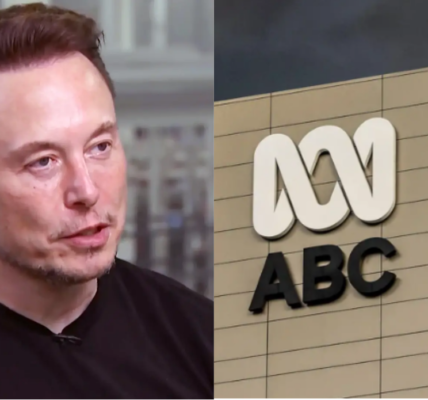
In a move that has shocked media insiders and sent Twitter into a frenzy, Elon Musk is reportedly considering buying ABC, with one clear mission: to “set things straight.” And in typical Musk fashion, his first order of business would be firing longtime ABC anchor David Muir, the face of World News Tonight.

The decision, it seems, stems from Muir’s role in the controversial presidential debate between Donald Trump and Kamala Harris, where Musk claims Muir “crossed the line” with his moderation tactics.

“ABC is broken. Journalism is broken. And who better to fix it than me?” Musk reportedly told close associates in a private conversation. “David Muir is just the beginning. ABC needs a reboot, and I’m ready to hit the reset button.”

The news, while not officially confirmed by Musk, has already sparked waves of speculation about what the billionaire would do with a major news network under his control. Known for his bold, unpredictable moves—from launching rockets with SpaceX to acquiring and overhauling Twitter/X—Musk’s latest plan could signal a dramatic shift in the world of mainstream media.

The seeds of this potential buyout were sown during the recent presidential debate, moderated by Muir and his ABC colleague Linsey Davis. The debate, which featured heated exchanges between Donald Trump and Kamala Harris, became an instant flashpoint for controversy—primarily due to the moderators’ handling of Trump’s responses.
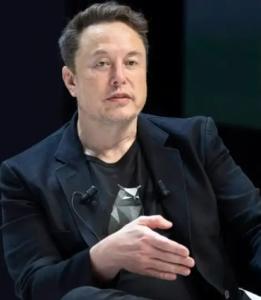
Throughout the debate, Muir fact-checked Trump several times, challenging his statements on topics ranging from immigration to the economy. Meanwhile, Harris appeared to glide through the debate with minimal interruptions, a fact that did not go unnoticed by Trump’s supporters, Musk among them.

“The moderators were completely one-sided,” Musk tweeted after the debate. “It was like watching a rigged game, and David Muir was the referee who had money on the other team.”

For Musk, the debate represented everything that’s wrong with modern journalism: biased reporting, partisan moderation, and a complete disregard for balanced coverage. And while his critique of Muir may have started as a post-debate rant, it has quickly snowballed into a full-blown campaign to take control of one of the biggest news networks in America.

If there’s one thing Musk is known for, it’s his ability to disrupt industries. Whether it’s electric cars, space travel, or social media, Musk has a knack for taking established systems and turning them on their heads. Now, it seems, his attention has shifted to the media industry, where he believes his unique brand of innovation is sorely needed.

“ABC is stuck in the past,” Musk reportedly told friends. “The way they cover news, the way they moderate debates—it’s all outdated. People don’t trust the media anymore, and for good reason. It’s time to change that.”

So, what would Musk’s ABC look like? Sources close to the billionaire say he envisions a media platform that blends traditional journalism with cutting-edge technology. Think AI-driven news anchors, real-time fact-checking powered by algorithms, and live viewer interaction during broadcasts via Twitter/X.

But Musk’s vision for ABC doesn’t stop there. According to insiders, he’s also toying with the idea of integrating SpaceX and Tesla content into the network’s programming, giving viewers behind-the-scenes access to rocket launches, electric vehicle innovations, and perhaps even live updates on Musk’s latest plans to colonize Mars.

“I want to bring news into the future,” Musk said. “Imagine tuning in to watch the news and getting updates from space at the same time. That’s where we’re headed.”

At the center of Musk’s media ambitions, of course, is the firing of David Muir, a fixture of ABC News for years. For many viewers, Muir is synonymous with credibility and professionalism, but for Musk, he represents everything that’s wrong with the mainstream media.

“Muir’s a dinosaur,” Musk reportedly said in a private meeting. “He’s been doing the same thing for years, and people are bored of it. The future of news isn’t some guy in a suit reading off a teleprompter. It’s dynamic, interactive, and, most importantly, fair.”

Muir has not publicly responded to the rumors of Musk’s potential buyout or the possibility of being ousted from his position. However, those close to the anchor say he’s taking the news in stride, knowing full well that Musk’s plans are far from a done deal.

“David’s been in this business a long time,” said one ABC insider. “He knows how to handle pressure, and he’s not about to let some billionaire tech mogul push him out without a fight.”

Still, the prospect of Musk buying ABC—and firing Muir—has sent shockwaves through the network. Some staffers are reportedly concerned about what Musk’s takeover could mean for journalistic integrity, while others are excited about the possibility of working for someone as innovative (and unpredictable) as Musk.

As news of Musk’s potential ABC buyout spread, reactions from the public have been predictably divided. Supporters of Musk, particularly those who share his disdain for mainstream media, have hailed the move as a long-overdue shakeup of a broken system.

“Finally, someone is going to take on the media!” one Musk fan tweeted. “David Muir’s been coasting for too long. It’s time for someone to bring real change, and Musk is the guy to do it.”

On the other hand, critics of Musk’s plan argue that his takeover of a major news network could spell disaster for journalism. With Musk’s well-documented tendency to clash with reporters and control the narrative on Twitter/X, some fear that ABC under Musk’s leadership would become more of a propaganda machine than a trusted news source.

“Elon Musk owning a news network? What could possibly go wrong?” one journalist sarcastically commented. “This is a man who blocks reporters for asking tough questions. Imagine what he’ll do if he runs ABC.”

LEAVE A RESPONSE

Email của bạn sẽ không được hiển thị công khai. Các trường bắt buộc được đánh dấu *

News

Karoline Leavitt Tried to Corner De Niro on Live TV — But One Sentence from Him Changed Everything Karoline Leavitt stepped into the studio with a plan. Dressed in crisp professionalism and armed with talking points designed to provoke, she believed she had the upper hand. The cameras rolled, the lights glared, and millions of viewers tuned in — but what unfolded in the next few minutes would not be the victory she expected. Instead, it became a moment that left the studio in stunned silence, the internet ablaze, and the nation asking a single question: What did Robert De Niro say — and how did one sentence silence one of the boldest conservative voices on live television? A Tense Setup from the Start The segment was billed as a “no-holds-barred discussion” between two opposing worlds — a conservative political firebrand and one of Hollywood’s most outspoken liberal legends. Leavitt, a former Trump spokesperson and now a rising right-wing media figure, had been outspoken in her criticism of De Niro’s political activism for years. But this was the first time the two had ever met face-to-face — and it was live, unscripted, and uncensored. Even before the interview began, tension hung in the air. Viewers noted how Leavitt’s tone in the introduction was laced with sarcasm, referring to De Niro as “the actor who thinks he’s a politician.” De Niro, stoic and tight-lipped, gave nothing away. Few knew what was about to happen. The Exchange Begins Leavitt opened with what many expected: jabs about Hollywood, accusations of hypocrisy, and thinly veiled references to De Niro’s past controversies. “You’ve spent decades playing tough guys on screen,” she said with a smile that didn’t reach her eyes. “But do you ever worry that in real life, you’re just another elitist lecturing the rest of us?” The audience chuckled nervously. De Niro didn’t respond. He waited. Leavitt pressed on: “You’ve made statements calling certain political figures ‘criminals,’ ‘thugs,’ even ‘a danger to democracy.’ Don’t you think that kind of rhetoric is dangerous?” Still calm, De Niro simply replied: “I think silence in the face of corruption is far more dangerous.” It was sharp, but not the moment that changed everything. That came just seconds later. The Line That Left Everyone Speechless Leavitt leaned in. “So you see yourself as some kind of moral authority?” she challenged. And that’s when De Niro finally looked her directly in the eyes, leaned back in his chair, and said: “No — but at least I’m not pretending to be something I’ve never earned.” The words landed with an audible thud. The audience stopped breathing. Even the host, who had tried to remain neutral, blinked in disbelief. Leavitt froze. Her expression faltered, just for a moment — enough for the viewers at home to catch it. And just like that, the dynamic in the room shifted completely. Why That One Sentence Hit So Hard It wasn’t just the delivery. It wasn’t just the timing. It was the implication behind De Niro’s words — and the weight of his decades in the public eye. Many interpreted the line as a subtle jab at Leavitt’s rapid political ascent, her close ties to controversial figures, and her tendency to position herself as a patriotic underdog without the record to back it up. In contrast, De Niro — for all his polarizing moments — has decades of awards, activism, and cultural influence behind him. Whether you love him or loathe him, his voice carries weight. And that weight was felt like a punch across the airwaves. Social Media Reaction: “She Walked Right Into It” Within minutes, clips of the exchange flooded Twitter, TikTok, and YouTube. The moment was replayed, remixed, and captioned across platforms. “That was brutal. She walked right into it.” “You don’t go toe-to-toe with De Niro unless you’re ready for blood.” “He said that with ice in his veins.” Even those who typically disagreed with De Niro politically admitted it was a devastating line — and that Leavitt had underestimated her opponent. A Cultural Clash: More Than Just a Debate What made this moment so explosive wasn’t just the personal sting. It was the symbolism. Here was a Gen Z conservative firebrand, media-savvy and bold, confronting a Baby Boomer icon whose worldview was shaped by Watergate, Vietnam, and decades in the cultural spotlight. Two Americas. Two definitions of patriotism. Two completely different standards of truth. Leavitt brought confrontation. De Niro brought history. And in that single moment — just one sentence — the generational, political, and cultural clash reached its boiling point. Damage Control Begins Leavitt’s team responded quickly after the segment, releasing a statement claiming De Niro had “attacked her character without cause” and calling the show “a setup designed to humiliate.” They pointed out that De Niro was given advance warning of the topics, while Leavitt allegedly wasn’t. But fact-checkers quickly noted: both parties had been briefed. Meanwhile, De Niro remained silent. No follow-up statement. No interviews. Just one post on his official account: “When the truth is uncomfortable, people call it an attack. I call it honesty.” Once again, minimal words — maximum impact. Media Divided — But Viewership Soars As expected, media outlets quickly took sides. Left-leaning pundits hailed De Niro as a symbol of “grace under pressure,” praising his restraint and sharp wit. Right-leaning outlets accused the show of ambushing Leavitt, painting De Niro’s comment as “smug and elitist.” But if there was one thing everyone agreed on — it was that this moment would be replayed for years. Ratings for the show skyrocketed. Analysts said it was one of the most-watched live interviews in months, if not years. Why This Moment Matters Now In a country deeply divided by ideology, generational shifts, and media echo chambers, this encounter struck a nerve. It wasn’t just about De Niro vs. Leavitt. It was about who gets to define truth. Who gets to speak with authority. Who gets to represent “the people.” And what happens when performance meets authenticity — live, unfiltered, and unprepared. Where Do They Go From Here? For Karoline Leavitt: Sources say she’s doubling down — preparing a follow-up appearance to “clarify her side.” Insiders claim she’s planning to reframe the narrative, highlighting what she calls “Hollywood’s obsession with silencing dissent.” She’s also reportedly been invited to appear on several right-wing platforms to “set the record straight.” For Robert De Niro: He’s saying little — letting the moment speak for itself. But insiders say he’s “completely unfazed” by the controversy and views it as proof that “telling the truth, even once, can cause an avalanche.” Final Thoughts: When One Sentence Becomes a Turning Point Live television has always been unpredictable. But every now and then, a single moment transcends the screen. A few words, delivered without theatrics, can shift the power dynamic and reveal something deeper — about our culture, our values, and ourselves. Robert De Niro didn’t come to fight. He didn’t shout. He didn’t insult. He just waited… and when the moment came, he used his silence like a scalpel — cutting straight through the noise with one cold, calculated truth. And in doing so, he reminded the world why experience still matters — and why, sometimes, the loudest mic drop is the one whispered with conviction. What’s next? Will Karoline Leavitt bounce back — or has this viral moment changed the public’s perception for good? One thing’s clear: the world was watching… and no one will forget what happened that night.